
Cicaplast Gel B5 Uses: When to Use the Gel vs the Balm
Cicaplast Gel B5 is best when you want a lighter, breathable, barrier-supporting layer, especially for irritation, post-procedure care, or when heavier balms feel too greasy. Cicaplast Baume B5 is better when your skin is extremely dry, flaking, or needs more occlusive protection. The newer Cicaplast B5 Spray is great for comfort and reapplication on the go.
Quick helpful reads if your skin is freaking out: Skin Barrier Repair Routine and Why Does My Moisturizer Burn?
Disclosure: Some La Roche-Posay products mentioned were gifted to me (#giftedbylarocheposay). This post also contains affiliate links. If you purchase through these links, I may earn a small commission at no extra cost to you. I only recommend products I personally use or recommend in clinic.
What Is Cicaplast B5? The Science Behind the Formula
Before we get into uses, it helps to understand what makes Cicaplast different from a basic moisturizer. Both the gel and the baume are built around three star ingredients that dermatologists love for compromised skin.
Panthenol (Pro-Vitamin B5) is the hero ingredient and the reason for the B5 in the name. It hydrates, calms inflammation, supports the skin's natural wound-healing response, and helps repair a compromised barrier. Panthenol is one of the most well-studied soothing ingredients in dermatology and is genuinely effective at concentrations as low as 1 to 5 percent.
Madecassoside is a purified extract from Centella asiatica (the K-beauty staple often called cica). It calms redness, supports collagen production, and is one of my favorite ingredients for irritated or post-procedure skin. I have a deeper dive on this ingredient in my centella asiatica guide.
La Roche-Posay Thermal Spring Water is the brand's signature soothing base. It contains a high concentration of selenium, which has antioxidant and skin-calming properties. This is the same thermal water in all of LRP's sensitive-skin formulas.
Together, these three ingredients make Cicaplast useful for almost any phase where your skin is angry, healing, or sensitive. The gel and the baume use the same active triad but in dramatically different textures, which is why one can be perfect for your routine while the other feels all wrong.
Cicaplast Gel B5 vs Baume B5 vs Spray: The Side-by-Side
This is the question I get asked most often. Here is the quick comparison so you can pick the right one for your skin.
| Product | Texture | Best For | Tier |
|---|---|---|---|
| Cicaplast Gel B5 | Lightweight, breathable, fast-absorbing | Irritated skin, under sunscreen, oily/acne-prone | Drugstore |
| Cicaplast Baume B5 | Rich, occlusive, slightly thick | Dry, flaking, peeling skin, retinoid acclimation | Drugstore |
| Cicaplast B5 Spray | Light mist, no rubbing required | On-the-go comfort, post-shave, reapplication | Drugstore |
The simplest way to think about it: gel is the daytime workhorse, baume is the nighttime rescue, and spray is the in-between convenience option. If you're only buying one and you're not sure, start with whichever matches your current skin state. Lighter skin types and active irritation phases tend to do better with the gel. Dry, flaky, or barrier-wrecked skin tends to need the baume.
01 / The Lightweight Hero
La Roche-Posay Cicaplast Gel B5

The gel is best when you need barrier support but do not want a heavy occlusive layer. It works beautifully for irritation, redness, and those "my skin can't tolerate anything" phases. It also layers cleanly under sunscreen and makeup, which the baume cannot do without pilling.
02 / The Night Rescue
La Roche-Posay Cicaplast Baume B5
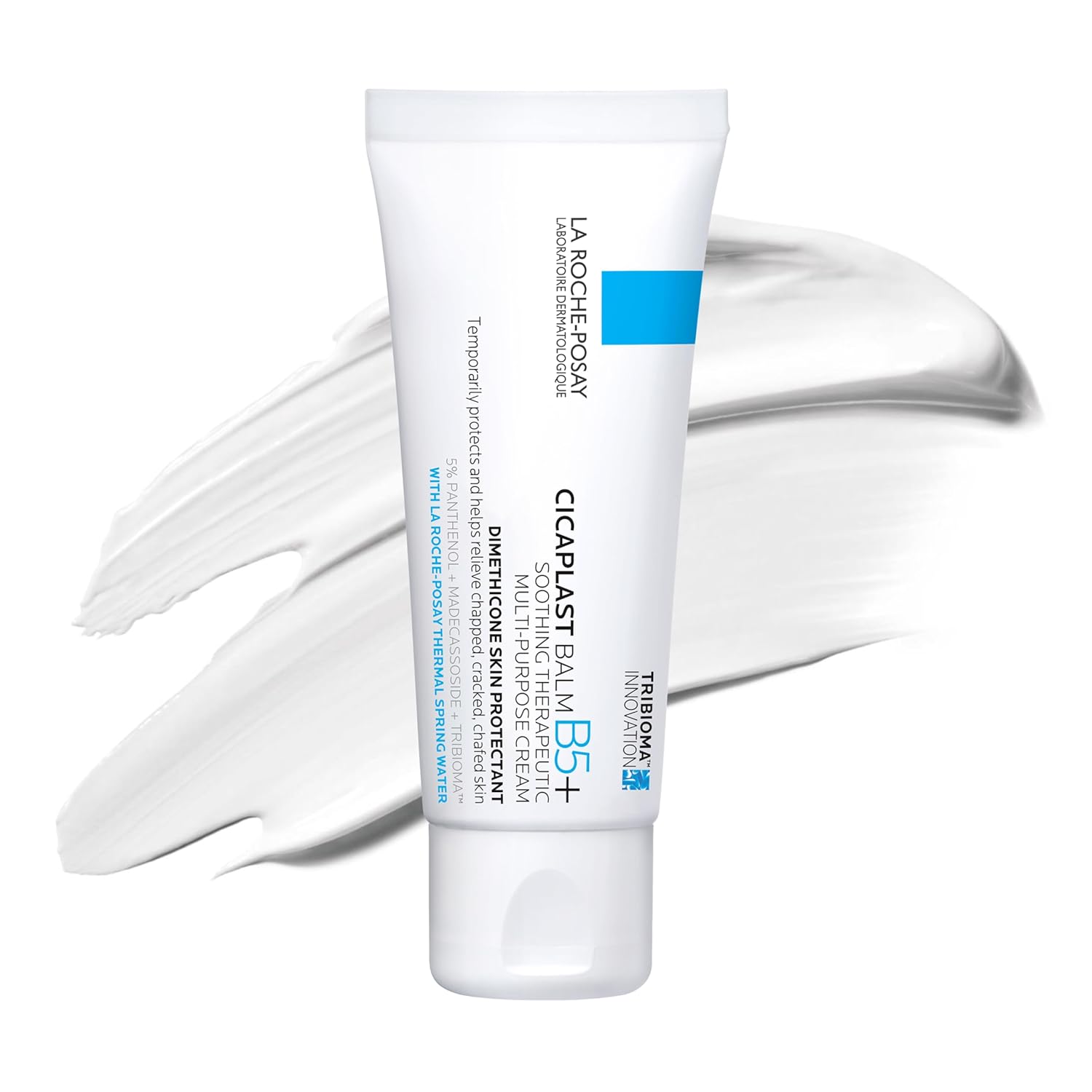
The baume is the heavy hitter. It is better when skin is visibly dry, flaking, or compromised and needs a more protective barrier. Ideal as a nighttime "seal it in" step. It is also the version I reach for when patients are deep in tretinoin peeling and need overnight barrier repair without a true occlusive ointment.
03 / The On-the-Go Mist
La Roche-Posay Cicaplast B5 Spray

I was recently gifted a few La Roche-Posay products (#giftedbylarocheposay), and I'm currently testing the Cicaplast B5 Spray. Think of this as a convenient barrier-supporting mist for times when your skin feels tight, irritated, or you want an easy comfort layer without rubbing your face. Great for reactive skin where touching the face feels uncomfortable, or as a daytime reset in dry weather.
Cicaplast Gel B5 Uses: The Six Scenarios I Recommend It For
1. When your skin is irritated, burning, or sensitive
If your skin is stinging from actives, weather, or "trying too much at once," the gel can be a comfortable reset product. Keep the rest of your routine boring: gentle cleanser, one bland fragrance-free moisturizer, Cicaplast Gel B5 on top if needed. Do this for 3 to 7 days and the irritation usually settles.
2. After procedures (when approved by your provider)
The gel texture is often easier than heavy balms when skin feels warm or reactive post-procedure. Always follow your post-procedure instructions, but Cicaplast Gel B5 is commonly recommended after laser, microneedling, or chemical peels because it soothes without occluding tightly on freshly treated skin.
3. Under sunscreen or makeup as a buffer layer
The gel is lighter than the baume, which makes it easier under SPF and makeup. Apply a thin layer, let it set for 1 to 2 minutes, then apply sunscreen. This is especially useful if your sunscreen typically stings or your skin feels reactive in the morning.
4. When the baume feels too greasy
If the baume is breaking you out, pilling under products, or just feels heavy, the gel is usually the better choice. The goal is comfort and consistency, and you should not be fighting your moisturizer.
5. For acne-prone skin that needs barrier support
The gel is lightweight enough that most acne-prone patients tolerate it well, even on the full face. It works as a soothing layer during active breakouts or to buffer irritating acne treatments like benzoyl peroxide, salicylic acid, or tretinoin. More on this in the dedicated acne section below.
6. As a comfort layer during tretinoin acclimation
If you're starting tretinoin and your skin is reactive but not yet peeling, the gel can be a gentle daily supportive layer that helps you tolerate the active. Use it before or after your tret depending on what your skin needs. I cover this in detail in my tretinoin sandwich method guide.
Cicaplast Baume B5 Uses: When to Reach for the Richer Version
The baume is the heavier sibling, and people often underuse it because the gel gets more attention online. Here are the times I specifically recommend the baume over the gel.
1. During tretinoin peeling and retinoid acclimation
This is the baume's prime use case. When your skin is actively flaking from tretinoin, retinaldehyde, or even a strong retinol, the baume provides exactly the right balance of barrier support and emollient cushioning. Apply over your tretinoin (after waiting 20 minutes for it to absorb) and on dry zones overnight. For more on the peeling phase specifically, my best moisturizer for tretinoin peeling guide walks through the full rescue routine.
2. Visible flaking or peeling skin
If you can see flakes on your face, the gel is not enough. The baume's richer texture seals in moisture and gives the barrier the lipids it needs to rebuild. Use it as the final step in your evening routine for 3 to 5 nights and the flaking usually resolves.
3. Eczema flares and atopic skin
Both the panthenol and madecassoside in the baume are well-tolerated by eczema-prone skin. The baume's richer texture makes it more appropriate for active eczema flares than the gel. For severe eczema, work with your dermatologist on prescription options, but the baume is a useful adjunct for daily barrier support.
4. Cracked lips, cheeks, or hands
The baume is small enough to throw in a bag and use as a multi-purpose balm. Cracked lips, raw nose from a cold, dry cuticles, or chapped cheeks all benefit. This is one of the most underrated uses.
5. As a winter night cream
For people with dry skin in cold climates, the baume can replace your regular moisturizer at night during winter. It's rich enough to function as a standalone night cream and the active ingredients support the barrier through cold-weather stress.
Does Cicaplast Clog Pores?
This is one of the most common questions I get about Cicaplast, especially from acne-prone patients. The short answer is no, both versions are labeled non-comedogenic and are generally well-tolerated. But there are some nuances worth knowing.
Cicaplast Gel B5 is the safer choice for acne-prone skin. The lightweight gel texture, fragrance-free formula, and lack of heavy occlusive ingredients make it well-tolerated on full face, even during active breakouts. Most of my acne patients can wear the gel daily without issue.
Cicaplast Baume B5 is richer and contains shea butter, which is non-comedogenic in most studies but can feel heavy on oily or acne-prone skin. I usually recommend the baume only on dry patches (around the mouth, on the cheeks, on dry zones) rather than as a full-face product if you have active acne. Using it as a spot treatment for irritation rather than as a moisturizer reduces the risk.
If you do break out from either product, it is much more often from the occlusion combining with another product in your routine rather than from Cicaplast itself. Pay attention to what you're layering on top.
Can You Use Cicaplast Baume B5 Every Day?
Yes. Cicaplast Baume B5 is formulated for daily use and is safe for long-term application. There is no acclimation period, no active ingredients to worry about, and no risk of overuse the way there is with actives like retinoids or AHAs.
Many of my patients use it nightly during retinoid acclimation or as a winter night cream. Others use it twice daily on chronic dry patches. For most skin types, daily or even twice-daily use is fine.
The only group I tell to limit daily use is oily or acne-prone skin types, who sometimes find the baume too heavy as a full-face product. For those patients, I recommend using the baume only on dry patches, only on tretinoin nights, or alternating with a lighter moisturizer.
Cicaplast for Tretinoin Users: How to Pair Them Correctly
This is one of the most common reasons I recommend Cicaplast in clinic. Tretinoin causes dryness, irritation, and peeling, especially in the first 4 to 12 weeks. Cicaplast is genuinely useful for buffering all three.
If you're early in tretinoin acclimation (weeks 1 to 4): Try the gel as a comfort layer applied after your tretinoin has absorbed. Wait 20 minutes after applying tretinoin, then apply the gel, then your regular moisturizer on top.
If you're peeling (weeks 4 to 8): Switch to the baume. It provides more emollient cushioning and works as your final overnight step. Apply tretinoin to dry skin, wait 20 minutes, layer a hydrating serum, then seal with the baume.
If you're acclimated and just need maintenance (months 3 plus): Most patients no longer need Cicaplast daily once their skin is tolerating tretinoin well. Keep it on hand for flare nights or after a stronger tret application.
For the full breakdown of pairing moisturizers with tretinoin, see my best moisturizers with tretinoin guide and the sandwich method walkthrough.
Cicaplast for Acne: Where It Fits in an Acne Routine
If you're treating acne with active ingredients (benzoyl peroxide, salicylic acid, tretinoin, adapalene), Cicaplast can quietly carry your routine. Active acne treatments are inherently irritating, and a calming barrier-supportive product like Cicaplast Gel B5 helps you tolerate them long enough to actually see results.
How to use it in an acne routine:
- Apply your acne treatment first to clean, dry skin
- Wait 10 to 15 minutes for it to absorb
- Apply a thin layer of Cicaplast Gel B5 as a comfort layer
- Follow with a lightweight moisturizer if needed
- Use sunscreen daily in the morning
Skip the baume for active acne unless you have very dry patches that need extra protection. The gel is the version that plays nicely with acne treatments.
Cicaplast for Eczema: A Dermatologist's Take
Cicaplast is one of the products I recommend most often to eczema-prone patients between flares. The panthenol and madecassoside support the barrier between flares, and the formulas are fragrance-free and minimally irritating.
For active eczema flares, the baume is usually the better choice. Its richer texture provides the occlusive protection that eczema-affected skin needs to heal, and the active ingredients help calm the underlying inflammation. Apply two to three times per day to affected areas during active flares.
For maintenance between flares, the gel works well as a daily soothing layer applied after your regular moisturizer. It's lightweight enough to wear under sunscreen and helps prevent flare-ups by keeping the barrier supported.
Important caveat: severe eczema needs medical management. Cicaplast is a useful adjunct, but it is not a substitute for prescription treatments like topical steroids, calcineurin inhibitors, or biologics for moderate-to-severe atopic dermatitis. Work with your dermatologist.
How to Apply Cicaplast Gel B5 (or Baume B5)
The Standard Application
- Cleanse with a gentle, non-foaming cleanser (avoid hot water)
- Apply any hydrating serum first if you're dry or reactive
- Apply a thin layer of Cicaplast Gel B5 (or Baume B5) on top
- Follow with a moisturizer if your skin needs more occlusion
- In the morning, let it set for 1 to 2 minutes before applying sunscreen
If You're Pairing With Tretinoin
- Cleanse and wait until skin is completely dry
- Apply tretinoin to dry skin, pea-sized amount
- Wait 20 minutes
- Apply a hydrating serum if your skin is very dry
- Apply Cicaplast (gel for daily use, baume for peeling phases)
- Follow with a richer moisturizer overnight if needed
If your barrier is truly impaired, remove actives temporarily. My full reset guide is here: skin barrier repair routine.
Frequently Asked Questions
What is Cicaplast Gel B5 used for?
Cicaplast Gel B5 is a lightweight, breathable barrier-supporting product used for irritated skin, post-procedure recovery, sensitive skin reset phases, and as a comfort layer under sunscreen or makeup. It pairs panthenol, madecassoside, and a soothing thermal water base in a non-greasy gel texture.
What is the difference between Cicaplast Gel B5 and Baume B5?
Cicaplast Gel B5 is lighter, breathable, and best for irritated skin or as a comfort layer under sunscreen. Cicaplast Baume B5 is more occlusive and richer, designed for visibly dry, flaking, or compromised skin that needs heavier protection. They are not interchangeable. Many people use the gel in the morning and the baume at night.
Does Cicaplast clog pores?
Cicaplast Gel B5 is the lighter, more breathable option and is generally well-tolerated by acne-prone skin. The Baume is richer and more occlusive, so acne-prone users sometimes find it too heavy on the full face. Both are non-comedogenic by label, but acne-prone individuals may want to start with the gel or use the baume only on dry patches.
Can you use Cicaplast Baume B5 every day?
Yes. Cicaplast Baume B5 is formulated for daily use and safe for long-term application. Many patients use it nightly during retinoid acclimation or as a winter night cream. Oily or acne-prone skin may prefer to limit daily use to dry patches or alternate with a lighter moisturizer.
Can I use Cicaplast Gel B5 with tretinoin?
Yes. Often, the gel is a great supportive layer during tretinoin use, especially as you're acclimating. If tretinoin is causing burning or peeling, pause actives temporarily and rebuild the barrier first.
Will Cicaplast cause breakouts?
The gel is typically lighter than the baume and well-tolerated by acne-prone skin. If you're acne-prone, start with the gel rather than the baume and monitor. If you do break out, it's more often from product layering than from Cicaplast itself.
Gel vs Balm, can I use both?
Yes. Many people use the gel in the morning (better under SPF and makeup) and the balm at night when they need extra protection. This is actually one of the most common ways I recommend pairing them in clinic.
Is Cicaplast Gel B5 good for eczema?
Yes, both versions of Cicaplast are useful for eczema-prone skin between flares. The baume is usually better during active flares because of its richer, more occlusive texture. The gel is better for maintenance and daily barrier support.
Is the Cicaplast B5 Spray worth it?
It can be useful for convenience, especially if you want a comfort layer without rubbing irritated skin. If you need heavy-duty barrier sealing, the balm or an ointment will usually do more. The spray excels at reapplication, post-shave use, and reactive skin where touching the face feels uncomfortable.
How long does Cicaplast take to work?
Most people feel immediate relief from stinging or tightness within minutes. Visible improvement in redness or barrier-related irritation usually shows within 2 to 7 days of consistent use. For chronic barrier issues, plan for 4 to 6 weeks of daily use to see meaningful change.
You Might Also Like
More on barrier repair and sensitive skin
Skin Barrier Repair Routine
If Cicaplast alone is not fixing your barrier, this is the full reset routine I walk patients through.
Read More → Sensitive SkinWhy Does My Moisturizer Burn?
If your skin stings even with Cicaplast, this is what is actually going on and how to fix it.
Read More → TretinoinBest Moisturizer for Tretinoin Peeling
If you are using Cicaplast to buffer tretinoin, this is the full peeling rescue playbook.
Read More → Sensitive SkinVanicream vs CeraVe for Sensitive Skin
Which sensitive skin drugstore brand is actually better for your skin type? A head-to-head breakdown.
Read More →The Final Take
If you're deciding between gel and baume: choose gel for a lighter, breathable layer (better for daily use, oily/acne-prone skin, and under SPF) and choose baume when you need more occlusive protection (better for nighttime, retinoid peeling, dry skin, and eczema flares). Many of my patients keep both on hand and use them for different occasions.
Shop my top three picks: Cicaplast Gel B5, Cicaplast Baume B5, and Cicaplast B5 Spray.
For more dermatologist-tested skincare education, follow me on Instagram and TikTok.
This post contains affiliate links, which means I may earn a small commission if you purchase through them at no additional cost to you. Some La Roche-Posay products mentioned were gifted to me (#giftedbylarocheposay). I only recommend products I personally use or recommend in clinic. This article is for educational purposes only and does not constitute personal medical advice; please consult your own dermatologist for individualized care.