
Best Retinol for Beginners: A Dermatologist's Guide (2026 Update)
Retinol is the single most studied anti-aging ingredient in dermatology, and it remains the over-the-counter benchmark for everything from fine lines and uneven tone to acne and dull texture. But because it is also the most likely ingredient to make you peel, flake, or quit before it ever has a chance to work, the way you start matters more than the bottle you pick.
This 2026 update reflects new product launches in the beginner retinol category, updated frequency and strength guidance, and the most common questions I get in clinic. If you were here for the original guide, the core advice has not changed: start low, go slow, and do not skip moisturizer. What is new is more product options across every budget and a clearer roadmap for graduating to stronger retinoids over time.
Looking specifically for a serum rather than a cream or oil? I have a dedicated guide to the best retinol serums for beginners that covers 7 picks across every budget, plus how serums differ from creams.
What Is Retinol, Actually?
Retinol is a vitamin A derivative that works by signaling your skin cells to behave more like younger, healthier cells. Specifically, it accelerates cell turnover, stimulates collagen production, normalizes pigment cell behavior, and helps unclog pores. Over time, this shows up on the skin as smoother texture, more even tone, fewer fine lines, and brighter, denser-looking skin.
Here is the part that confuses most people. Retinol itself is not the active form of vitamin A. The active form, the one that actually binds to receptors in your skin, is retinoic acid (which is what tretinoin is). Every over-the-counter retinoid you buy has to be converted by enzymes in your skin into retinoic acid before it can do anything. The more conversion steps required, the slower and weaker the effect, but also the gentler and more beginner-friendly.
The conversion order, from weakest to strongest, looks like this:
- Retinyl esters (retinyl palmitate, retinyl acetate, retinyl linoleate). Three conversions away from retinoic acid. Very gentle, very slow, often found in drugstore moisturizers labeled as having "retinol" without specifying.
- Retinol. Two conversions away. The classic, well-studied option for most beginner retinol routines.
- Retinaldehyde (retinal). One conversion away. Faster acting than retinol but often gentler than tretinoin.
- Retinoic acid (tretinoin, tazarotene). The active form. Prescription only in most countries. Strongest and fastest, also most irritating.
The best beginner retinol products tend to live in tiers 2 and 3, balancing real efficacy with skin-friendly formulation. If you have been peeling on tretinoin and want to step down to maintain results without the irritation, my full guide to the best moisturizers for tretinoin peeling is a useful companion read.
Retinol vs Retinal: Which Should a Beginner Use?
This is the question I get asked most often. The honest answer is "it depends on your skin," but here is the framework I use in clinic.
Choose retinol if: you have sensitive or reactive skin, you are nervous about starting, you want the most well-studied option, or you are pregnancy-planning and want to keep things conservative until you stop trying (note: stop all retinoids during pregnancy and breastfeeding).
Choose retinal (retinaldehyde) if: you want faster results, you tolerate actives reasonably well, or you are coming off tretinoin and want a step-down option. Retinaldehyde is one conversion step closer to retinoic acid, and some studies suggest it works up to eleven times faster than retinol of equal concentration. The trade-off is slightly more potential for redness in the first few weeks, though modern formulations like Medik8 Crystal Retinal and Avene RetrinAL are remarkably gentle for what they deliver.
For most beginners I see in clinic, I recommend starting with a low-concentration retinaldehyde rather than a low-concentration retinol. The efficacy-to-irritation ratio is usually better, and you graduate faster. But if you have eczema, rosacea, or significant ingredient sensitivities, traditional retinol in a barrier-supporting base is the safer bet.
The Beginner Retinol Strength Guide
One of the biggest sources of confusion in the retinol world is what the percentages on the bottle actually mean and which one is right for you. Here is a quick decoder.
| Strength | Active | Best For | Frequency to Start |
|---|---|---|---|
| 0.025% to 0.05% | Retinol | True beginners, sensitive skin, age 25 to 35 | 2 nights per week |
| 0.05% to 0.1% | Retinaldehyde | Beginners who want faster results | 2 to 3 nights per week |
| 0.1% to 0.3% | Retinol | Intermediate users, stronger anti-aging | 3 to 4 nights per week |
| 0.3% to 0.5% | Retinol | Acclimated users, mature skin | 4 to 5 nights per week |
| 0.5% to 1% | Retinol | Long-term users wanting tret-like results | Nightly (built up over months) |
| 0.05% to 0.1% | Tretinoin (Rx) | Graduating from OTC retinoids | Per dermatologist |
A few important notes on this table. First, percentages are not directly comparable across product formulations. A 0.3% retinol in a poorly formulated serum can be more irritating than a 1% retinol in a well-buffered cream because of how the active is delivered. Second, retinaldehyde at half the concentration of retinol is often roughly equivalent in potency, which is why retinal products tend to be labeled in tenths of a percent. Third, you do not need to graduate quickly. Some of my patients are happy at 0.5% retinol for years and never feel the need to move to tretinoin.
Why Starting Slowly Actually Matters
I cannot say this loudly enough. The single biggest reason beginners abandon retinol is that they start too strong, too fast. The skin barrier is a finite resource. When you push it too hard, you lose more time to irritation recovery than you ever would have lost by ramping up gradually.
Here is what I tell every patient starting out. Your goal in the first eight weeks is not visible results. Your goal is to build tolerance. If you can tolerate a low-strength retinoid two to three nights per week for a month, you have unlocked the ability to use it for the rest of your life. That is the win.
What slow looks like in practice:
- Pick the lowest concentration available in your chosen active.
- Apply pea-sized amount to dry skin two nights per week for the first two weeks.
- If no irritation, increase to three nights per week for two more weeks.
- If still no irritation, move to four nights per week.
- Continue increasing by one night every two weeks until you reach your tolerated frequency (often nightly, sometimes alternate nights for life).
- Consider stepping up concentration only after you have been tolerating your current strength nightly for three months.
If you experience any peeling, redness, or stinging that lasts more than 48 hours, drop back one frequency level for a week before increasing again. This is the same logic I walk through in my tretinoin sandwich method guide, and it works just as well for retinol.
The Beginner Retinol Mistakes I See Over and Over
- Starting at too high a concentration because the lower one "felt like it was not doing anything."
- Using retinol every night from day one (this almost guarantees a barrier flare in week three).
- Skipping moisturizer because you read it would "block" the retinol (it does not).
- Layering retinol with vitamin C, AHAs, BHAs, or benzoyl peroxide on the same night (this stacks irritation).
- Forgetting daily SPF (retinol increases UV sensitivity, and unprotected sun exposure undoes all the work).
Two more I see often that are worth flagging. Number six: applying retinol to damp skin "to enhance absorption." This is a TikTok myth that consistently makes my patients flare. Retinol is best applied to completely dry skin, ideally fifteen minutes after cleansing. Damp skin increases penetration, which on a beginner means it increases irritation, not benefits.
Number seven: assuming the eye area is off-limits. The skin around the eyes ages first and benefits enormously from retinol. The trick is using a smaller amount and applying to the orbital bone (the bony rim around the eye), not the lid itself. The product migrates upward overnight and reaches the area gently. If your retinol is too strong for under-eye use even diluted, look at gentle eye-specific options like Medik8 Crystal Retinal Ceramide Eye.
What to Pair (and Not Pair) With Retinol
Once you have your retinol picked out, the rest of your routine matters as much as the active itself. Here is the cheat sheet.
Pairs beautifully: niacinamide (calms and supports the barrier), peptides (anti-aging without irritation), hyaluronic acid (hydration), ceramides (barrier repair), squalane (emollient cushioning), bakuchiol (some studies show it enhances retinol tolerance). All of these can be in your routine on the same night as retinol.
Use on alternate nights or at separate times: vitamin C (use AM, retinol PM), AHAs and BHAs (use on retinol-off nights), benzoyl peroxide (only with non-retinaldehyde retinols, and not on the same night).
Skip entirely while you are starting: physical scrubs, acid toners (glycolic, salicylic, mandelic) on retinol nights, fragrance-heavy products, and any other "actives" until your barrier has acclimated.
How to Actually Use Retinol: The Beginner Routine
Here is the routine I write down for every patient starting retinol.
Morning
- Gentle, non-foaming cleanser
- Vitamin C serum (optional but recommended for antioxidant + UV synergy)
- Hydrating serum or essence (hyaluronic acid, panthenol)
- Moisturizer
- Mineral or hybrid sunscreen, broad-spectrum SPF 30 or higher (non-negotiable)
Evening (retinol nights)
- Gentle, non-foaming cleanser
- Wait 15 minutes for skin to be completely dry
- Pea-sized retinol applied to entire face, avoiding the immediate eye area and corners of the mouth
- Wait 5 to 10 minutes
- Moisturizer (preferably ceramide-rich)
- Optional: thin layer of an emollient or occlusive on any dry zones
Evening (off nights)
- Gentle cleanser
- Hydrating serum
- Moisturizer
- Optional: a chemical exfoliant or hydrating mask, only after week 4
For more on which moisturizer to layer with your retinol, see my full guide to the best moisturizers to use with tretinoin (most of those picks pair just as well with retinol) and my deep dive on why your moisturizer might burn if you are running into issues.
The Best Beginner Retinols of 2026: My Top 7 Picks
I have ranked these from most beginner-friendly to most advanced, with the strength tier and skin type each is best for. Every product on this list is one I have either personally used long-term or recommend regularly in clinic.
01 / The Gentlest Retinaldehyde
Avene RetrinAL 0.05 Serum

If your skin is reactive, prone to redness, or you have a history of eczema or rosacea, this is where I would start. Avene RetrinAL 0.05 uses retinaldehyde at 0.05%, which delivers retinol-equivalent results at one of the gentlest formulations on the market. The base is a soothing thermal water plus glycerin and stable retinaldehyde encapsulated to reduce irritation.
It is officially marketed as a "first retinoid" and Avene has clinical data showing it improves fine lines and skin firmness over twelve weeks of use. Most of my sensitive-skin patients can tolerate it twice a week from week one with no flare.
02 / The Numbered Step-Up System
Medik8 Crystal Retinal

Medik8 Crystal Retinal is the most beginner-friendly system on the market because it removes the guesswork. The line goes 1, 3, 6, 10, 20 (representing 0.01% to 0.2% retinaldehyde), and you graduate one step at a time once you have built tolerance. Most beginners start with Crystal Retinal 1 or 3, use it for at least three months, then move to Crystal Retinal 6.
The formula itself is elegant: stable encapsulated retinaldehyde plus glycerin, vitamin E, and hyaluronic acid in a creamy serum-balm hybrid. It absorbs quickly and leaves skin softened rather than tight, which is rare in this category.
This is what I recommend to patients who are beginner retinol users but suspect they will want to graduate eventually. The branded numbering takes the anxiety out of progression.
03 / The Budget Retinal Hero
The Ordinary Retinal 0.2% Emulsion
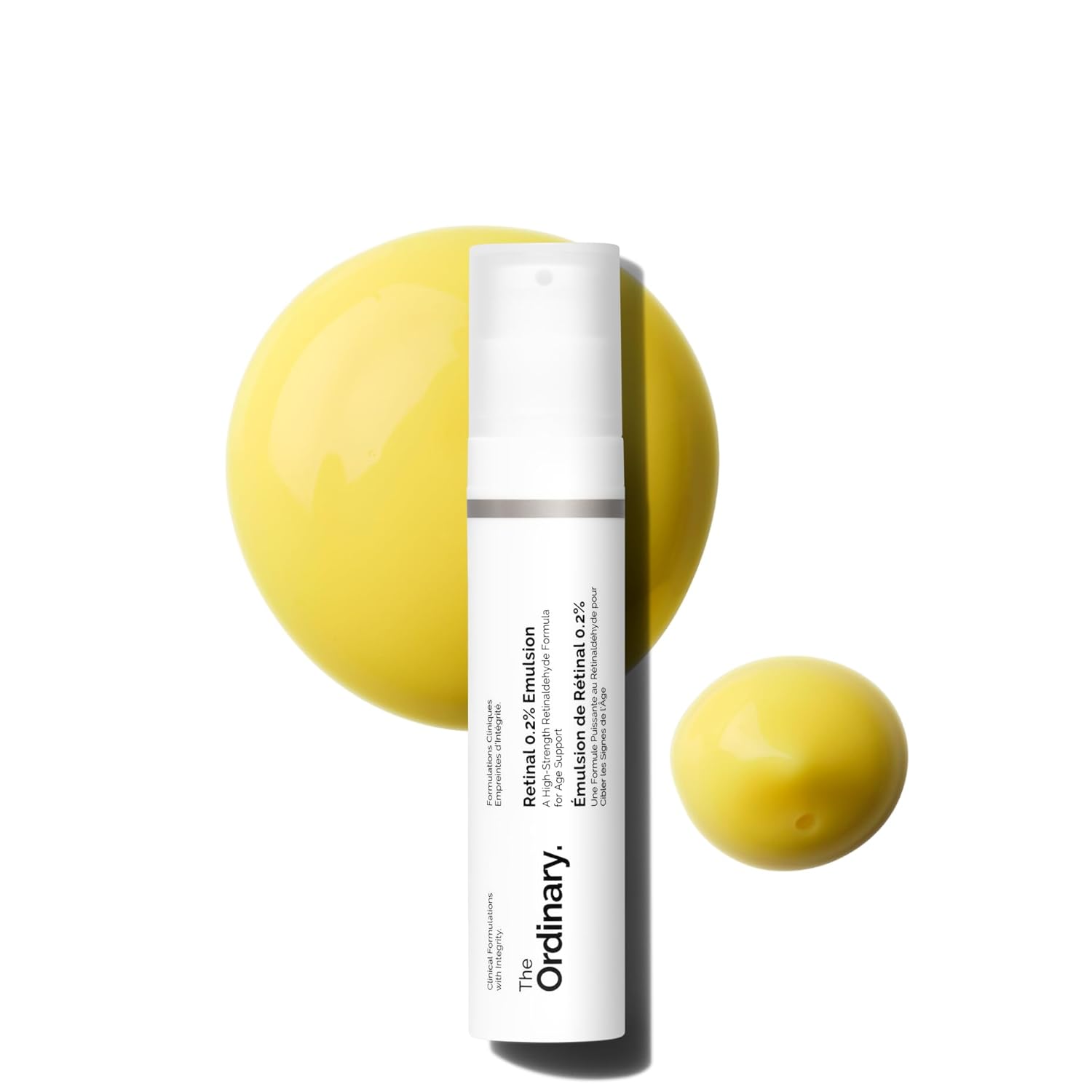
If you want a clinically meaningful retinaldehyde at a budget-friendly price point, this is the pick. The Ordinary launched their retinaldehyde line in late 2023 and it has held up beautifully against picks at three to four times the price. The formula uses a stable retinaldehyde at 0.2% in a lightweight emulsion base.
I want to be honest here: 0.2% retinaldehyde is not a true beginner concentration. It is closer to "intermediate." But the encapsulation and the lightweight, fragrance-free emulsion mean it tolerates remarkably well even for first-time retinoid users, especially if you start at one to two nights per week and ramp slowly.
This is my recommendation for budget-conscious beginners who want a real retinaldehyde experience without the premium price tag.
04 / The Underrated Drugstore Retinal
Naturium Retinaldehyde Serum 0.05%

Naturium has quietly built one of the best affordable actives lines on the market, and their retinaldehyde serum is a standout for beginners. At 0.05% retinaldehyde, it sits in that sweet spot for true first-time users, and the formula is bolstered with niacinamide, ceramides, and squalane for barrier support.
The texture is a thin lotion-serum that absorbs in seconds and layers cleanly under any moisturizer. It is fragrance free, packaged in an opaque airless tube to keep the retinaldehyde stable, and priced low enough to use without anxiety.
This is my pick for someone who wants the same starting concentration as Avene RetrinAL but at a fraction of the price.
05 / The Clinical Classic
SkinCeuticals Retinol 0.3

If you are picking a traditional retinol rather than a retinaldehyde, this is my number one recommendation. SkinCeuticals Retinol 0.3 has been around for decades and is one of the most studied OTC retinols on the market. It uses 0.3% pure retinol in a stable, encapsulated delivery system that releases the active over time, which dramatically reduces the irritation typical of straight retinol.
The line graduates from 0.3 to 0.5 to 1.0, so you have a clear step-up path. Most beginners do well starting at 0.3% twice a week, building to nightly over three months.
I recommend this to patients who specifically want retinol (not retinaldehyde), have somewhat resilient skin, or are prepared to invest in a long-term clinical product.
06 / The Barrier-Supportive Beginner
Prequel Retinal Renewal Serum
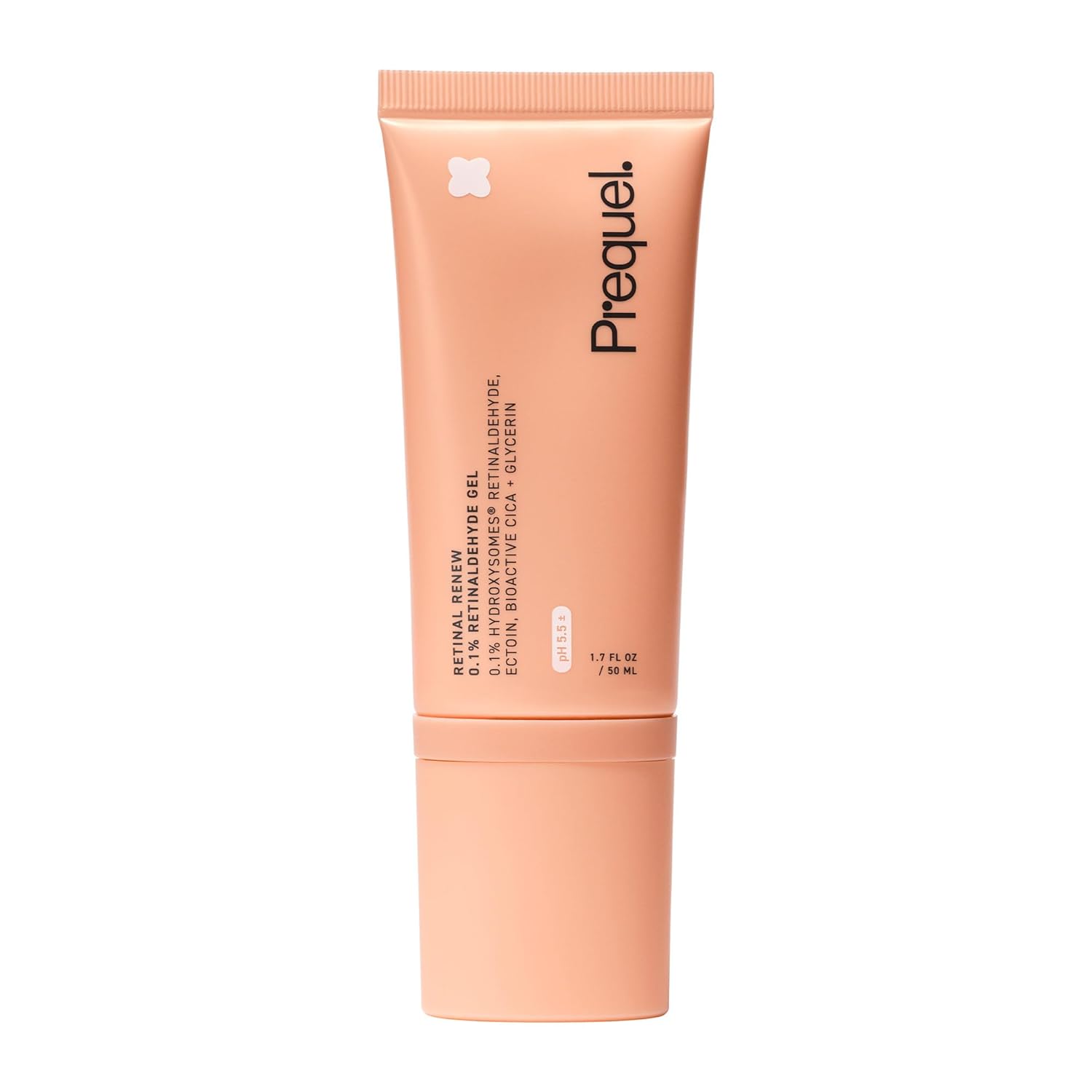
Prequel is a newer brand that focuses on "training wheels" actives, and their Retinal Renewal Serum is one of the gentlest entry-level retinaldehyde products I have used. It pairs encapsulated retinaldehyde with niacinamide, panthenol, and a peptide blend that genuinely supports the barrier while the retinaldehyde works.
The texture is thin and almost gel-like, layers easily, and the price point is mid-tier rather than premium. It is also fragrance free and dermatologist-tested for sensitive skin.
This is my pick for the patient who is anxious about retinoids, has had a bad experience with another product, or wants the most coddled possible introduction to the category.
07 / The Drugstore Workhorse
RoC Retinol Correxion Deep Wrinkle Night Cream

RoC has been formulating retinol creams since the 1990s, and Deep Wrinkle Night Cream remains one of the best drugstore options. The formula uses pure retinol in a rich emollient cream base, which means the moisturizer and the active are delivered in one step. For a beginner who finds layering intimidating, this is a real benefit.
The strength is not labeled on the box, but it is widely understood to sit around 0.05 to 0.1% retinol. That is squarely in beginner range. The texture is rich and slightly fragranced (the one downside for sensitive skin), but tolerance is generally excellent.
I recommend this to readers who want a "set it and forget it" drugstore option that simplifies their routine and does not require a separate moisturizer step on retinol nights.
Quick Comparison: Best Beginner Retinol Side by Side
| Product | Active | Best For | Tier |
|---|---|---|---|
| Avene RetrinAL 0.05 | 0.05% retinal | Sensitive, reactive skin | Mid |
| Medik8 Crystal Retinal | 0.01-0.2% retinal | Step-up system seekers | Mid to Premium |
| The Ordinary Retinal 0.2% | 0.2% retinal | Budget intermediate users | Drugstore |
| Naturium Retinaldehyde 0.05% | 0.05% retinal | True beginners on a budget | Drugstore |
| SkinCeuticals Retinol 0.3 | 0.3% retinol | Classic retinol, resilient skin | Premium |
| Prequel Retinal Renewal | Low-conc retinal | Retinoid-anxious users | Mid |
| RoC Retinol Correxion | 0.05-0.1% retinol | Drugstore, simplicity | Drugstore |
Retinol Purging vs Retinol Reaction: Which Is It?
One of the most common questions I get from new retinol users is whether the breakouts they are experiencing are "purging" (a normal part of acclimation) or a true reaction (something to stop). Here is how to tell the difference.
Purging looks like: small comedones or whiteheads in areas where you typically already break out, appearing within the first four to six weeks, peaking around week three, and resolving on their own without changing your routine. Purging is caused by accelerated cell turnover bringing existing clogged pores to the surface faster.
A reaction looks like: redness, burning, itching, or hive-like bumps, breakouts in new areas where you do not typically break out, persistent flaking past four weeks, or symptoms that get worse over time rather than better. Reactions usually need a routine adjustment, a frequency reduction, or sometimes a product change.
The simplest rule: if it looks like your normal acne but more of it, give it eight weeks. If it looks like inflamed, sensitized skin, dial back to once or twice a week, add more moisturizer, and reassess at four weeks. If symptoms persist, see a dermatologist; you may have an ingredient sensitivity rather than a tolerance issue.
What to Expect: Your First Six Months
The single biggest reason beginners quit retinol is unrealistic expectations. Here is the actual timeline I share with patients.
Weeks 1 to 4. Mild dryness or flaking is normal. Skin may feel slightly tight or look subtly dull as old surface cells turn over faster than usual. You will not see "results" yet. The goal here is just to build tolerance.
Weeks 4 to 8. Texture starts to refine. Pores may look slightly smaller. Some patients experience a brief purge of existing congestion. Tone is starting to even out subtly.
Months 3 to 6. This is when the real visible changes appear. Fine lines soften, post-inflammatory pigmentation fades, skin looks denser and more luminous, and acne (if relevant) is meaningfully better. This is the payoff window.
Months 6 to 12. Continued improvement, but the rate of change slows. Maintenance becomes the focus. This is also when many users graduate to a stronger concentration or move to a prescription retinoid.
Is Retinol Safe During Pregnancy or Breastfeeding?
No. All forms of vitamin A used as a topical, including retinol, retinaldehyde, retinyl esters, and prescription retinoids, should be avoided during pregnancy and breastfeeding. Although the systemic absorption from topical retinol is low, no controlled studies have established safety, and the risk of birth defects from systemic vitamin A is well-documented enough that the dermatology and obstetrics communities recommend pausing.
Safer alternatives during pregnancy include bakuchiol (a plant-derived retinol mimetic with growing evidence behind it), peptides, vitamin C, niacinamide, and azelaic acid (which is pregnancy-safe and surprisingly effective for tone and acne).
If you are actively trying to conceive, most dermatologists recommend stopping retinol once you start trying. You can resume after weaning if you choose.
Frequently Asked Questions
What is the best retinol for a beginner?
For most beginners, the best retinol starts at a low concentration in a barrier-supporting formula. My top picks for true first-time users are Avene RetrinAL 0.05 Serum, Medik8 Crystal Retinal 1, Naturium Retinaldehyde Serum 0.05%, and SkinCeuticals Retinol 0.3 once you have built up tolerance.
What percentage of retinol should a beginner start with?
Beginners should start with 0.025% to 0.05% retinol or 0.05% to 0.1% retinaldehyde. Use it two to three nights per week for the first month, then build up to nightly use as your skin acclimates over the following two to three months.
How long does it take retinol to work?
You may notice subtle improvements in skin texture and tone within four to eight weeks. More significant results, including reduction in fine lines and pigmentation, typically appear at three to six months of consistent use.
Can I use retinol every night?
Not in the beginning. Start with two to three nights per week for the first four weeks, then gradually increase frequency as your skin tolerates it. Most people can move to nightly use after eight to twelve weeks if their barrier is healthy.
What is the difference between retinol and retinal?
Both are over-the-counter retinoids. Retinaldehyde (retinal) is one conversion step closer to retinoic acid than retinol, which means it works faster (some studies suggest up to eleven times faster), but it can also be slightly more irritating in formulations of equal strength.
Is retinol safe during pregnancy or breastfeeding?
No. All forms of retinol, retinaldehyde, retinyl esters, and prescription retinoids should be avoided during pregnancy and breastfeeding. Safer alternatives include bakuchiol, peptides, niacinamide, and azelaic acid.
Can I use retinol with vitamin C, niacinamide, or acids?
Niacinamide and peptides pair well with retinol and can be used in the same routine. Vitamin C is best used in the morning while retinol is used at night. AHAs, BHAs, and benzoyl peroxide should not be layered with retinol on the same night, especially as a beginner.
What is retinol purging and how long does it last?
Purging is a temporary increase in breakouts caused by accelerated cell turnover bringing existing clogged pores to the surface faster. It typically lasts four to six weeks and resolves on its own. If breakouts persist beyond eight weeks or appear in new areas, it is more likely a reaction than a purge.
Should I use retinol around my eyes?
Yes, but with care. The skin around the eyes ages first and benefits from retinol. Apply a tiny amount to the orbital bone (the bony rim around the eye), not the lid. The product migrates upward overnight. If your retinol is too strong, look at retinol-formulated eye creams.
When should I switch from retinol to tretinoin?
If you have been using a high-concentration retinol or retinaldehyde nightly for at least six to twelve months and want stronger results, talk to your dermatologist about graduating to tretinoin. Many patients are perfectly happy on retinol forever and never need to make the switch.
You Might Also Like
Ready for the next step?
Best Moisturizers to Use With Tretinoin
When you graduate from retinol to prescription tretinoin, these are the moisturizers I recommend.
Read More → TretinoinBest Moisturizer for Tretinoin Peeling
Peeling from your retinol or tret? These are the rescue products I use in clinic.
Read More → Retinol SerumsBest Retinol Serum for Beginners
Want a serum specifically? 7 picks from drugstore to clinical, with the strength to start at for your skin.
Read More → DrugstoreBest Drugstore Moisturizers 2026
12 dermatologist-tested drugstore moisturizers with picks for every skin type, all under $35.
Read More →The Bottom Line on Beginner Retinol
The best beginner retinol is the one you will actually use consistently for the next year. Pick a low concentration in a well-formulated base, start at two nights per week, and resist the urge to go faster.
My top three across budgets: Avene RetrinAL 0.05 for sensitive skin, Medik8 Crystal Retinal for the step-up system, and Naturium Retinaldehyde 0.05% for the best drugstore option.
Once you have been on retinol for six to twelve months and are looking for the next step, my dermatologist guides to the best moisturizers with tretinoin, the tretinoin sandwich method, and the best moisturizers for tretinoin peeling are the natural next reads. Retinol got you here. Tretinoin can take you further.
This post contains affiliate links, which means I may earn a small commission if you purchase through them at no additional cost to you. I only recommend products I have personally used or recommend in clinic. This article is for educational purposes only and does not constitute personal medical advice; please consult your own dermatologist for individualized care.