
Best Retinol Serum for Beginners: 7 Derm Picks
The Quick Answer
The best retinol serum for beginners is the one you will actually use consistently.
Pick a low concentration, start with two to three nights per week, and stick with it for at least twelve weeks before judging results. My top overall pick: Medik8 Crystal Retinal 3. Best drugstore: Naturium Retinaldehyde Serum 0.05%. Best for sensitive skin: Avene RetrinAL 0.05.
This post covers retinol serums specifically as a format. If you want the broader guide that includes retinol creams, oils, and other formats too, see my best retinol for beginners guide.
This post contains affiliate links. If you purchase through them, I may earn a small commission at no extra cost to you. I only recommend products I personally use or recommend in clinic.
Retinol Serum vs Retinal Serum: What's Actually in Your Bottle
Before we get into product picks, it helps to know what you are actually buying. The word "retinol" gets used loosely on marketing pages, but the actual active in your serum matters more than the brand name.
Retinol is the classic OTC vitamin A derivative. Your skin has to convert it through two enzymatic steps to become retinoic acid, the form that actually binds to your skin's receptors. This makes retinol gentler but slower to show results. Most drugstore serums use retinol.
Retinaldehyde (retinal) is one conversion step closer to retinoic acid than retinol. That means it works faster, sometimes up to 11 times faster according to some studies, without the prescription-level irritation of tretinoin. Retinal serums are what I increasingly recommend to beginners because the efficacy-to-tolerability ratio is often better.
Retinyl esters (retinyl palmitate, retinyl acetate) are the weakest form and require three enzymatic conversions. Sometimes found in beginner or eye-area products. Fine for very sensitive skin but not the most efficient choice for meaningful anti-aging.
When you shop retinol serums, look at the ingredient list for the actual active. A serum called "Retinol Boost" that uses retinyl palmitate is not the same as a serum with 0.3% pure retinol. Read the labels.
What to Look For in a Beginner Retinol Serum
Once you know what active you want, here is what makes a beginner retinol serum work.
Low starting concentration. 0.025% to 0.05% retinol, or 0.05% to 0.1% retinaldehyde. Anything higher than this as your first retinoid is asking for irritation.
Encapsulation technology. Modern retinol serums use encapsulated retinol (like liposomal or microencapsulated formulations) that releases the active slowly to reduce irritation. Look for words like "encapsulated," "time-released," or "gradual delivery" in the marketing.
Barrier-supportive base ingredients. Niacinamide, ceramides, panthenol, squalane, and hyaluronic acid all help buffer the retinol without competing with it. A well-formulated retinol serum includes at least two of these.
Fragrance-free. Fragrance sits on already-compromised skin during retinol acclimation and just adds irritation.
Opaque, airtight packaging. Retinol degrades on exposure to light and air. Skip serums in clear droppers or thin-walled bottles. Airless pumps and opaque tubes protect the active.
Quick Comparison: My 7 Best Retinol Serum Picks
| Serum | Active | Best For | Tier |
|---|---|---|---|
| Medik8 Crystal Retinal 3 | 0.03% retinaldehyde | Best overall, step-up system | Premium |
| Naturium Retinaldehyde Serum 0.05% | 0.05% retinaldehyde | Best drugstore retinal | Drugstore |
| The Ordinary Retinal 0.2% Emulsion | 0.2% retinaldehyde | Best budget for intermediate | Drugstore |
| Avene RetrinAL 0.05 Serum | 0.05% retinaldehyde | Best for sensitive skin | Mid-range |
| CeraVe Skin Renewing Retinol Serum | Encapsulated retinol | Best with ceramides | Drugstore |
| SkinCeuticals Retinol 0.3 | 0.3% retinol | Best clinical retinol | Premium |
| Sunday Riley A+ High-Dose | 6.5% retinoid blend | Best luxury splurge | Luxury |
01 / Best Overall Retinal Serum
Medik8 Crystal Retinal 3

Medik8 Crystal Retinal is the most beginner-friendly retinal serum system on the market because it removes the guesswork. The line goes 1, 3, 6, 10, 20 (representing 0.01% to 0.2% retinaldehyde), and you graduate one step at a time once you have built tolerance. Most beginners start with Crystal Retinal 1 or 3, use it for at least three months, then move up to Crystal Retinal 6.
The formula pairs stable encapsulated retinaldehyde with glycerin, vitamin E, and hyaluronic acid in a creamy serum that absorbs quickly without pilling. This is what I recommend most often to patients who are beginner retinol users but suspect they will want to graduate eventually.
02 / Best Drugstore Retinal Serum
Naturium Retinaldehyde Serum 0.05%

Naturium has quietly built one of the best affordable actives lines on the market, and this retinaldehyde serum is a standout. At 0.05% retinaldehyde, it sits in the sweet spot for true first-time users, and the formula is bolstered with niacinamide, ceramides, and squalane for barrier support. Fragrance free, packaged in an opaque airless tube.
This is my pick for someone who wants the same starting concentration as Avene RetrinAL 0.05 at less than half the price. If you are budget-conscious and skeptical of "drugstore" retinal, try this and be pleasantly surprised.
03 / Best Budget for Intermediate Users
The Ordinary Retinal 0.2% Emulsion
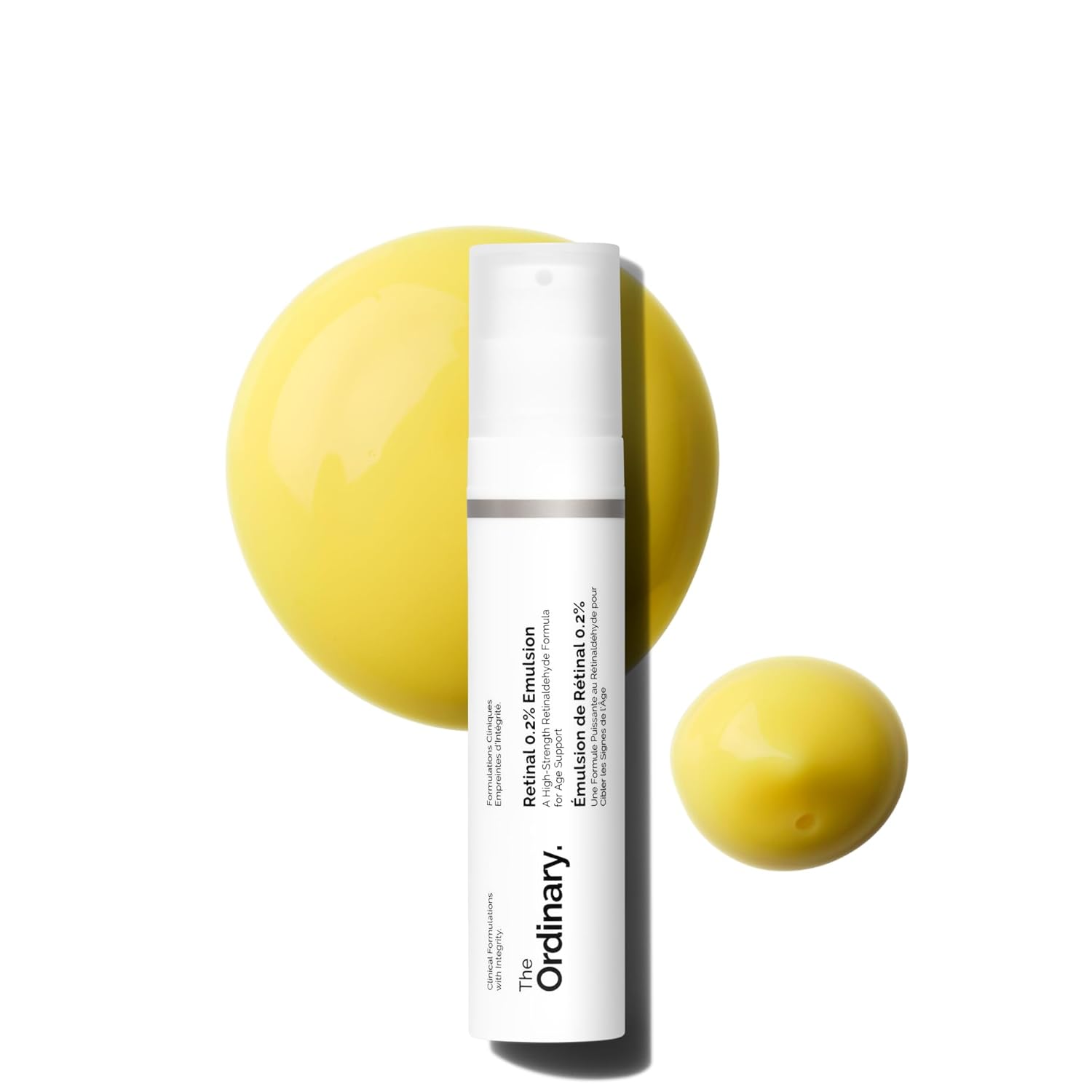
The Ordinary launched their retinaldehyde line in late 2023 and it has held up beautifully against picks at three to four times the price. The formula uses stable retinaldehyde at 0.2% in a lightweight emulsion base. Fragrance-free, encapsulated, and priced low enough to actually use consistently.
Honest note: 0.2% retinaldehyde is not a true "beginner" concentration; it is closer to intermediate. But the encapsulation and the lightweight base mean it tolerates remarkably well even for first-time retinoid users, especially if you start at one to two nights per week and ramp slowly. Skip if you have very reactive skin, otherwise this is a genuine drugstore gem.
04 / Best for Sensitive Skin
Avene RetrinAL 0.05 Cream

If your skin is reactive, prone to redness, or you have a history of eczema or rosacea, this is where I would start with a retinol serum. Avene RetrinAL uses retinaldehyde at 0.05% in one of the gentlest formulations on the market. The base is a soothing thermal water plus glycerin and stable retinaldehyde encapsulated to reduce irritation.
It is officially marketed as a "first retinoid" and Avene has clinical data showing it improves fine lines and skin firmness over twelve weeks of use. Most of my sensitive-skin patients can tolerate it twice a week from week one with no flare.
05 / Best with Ceramides Built In
CeraVe Skin Renewing Retinol Serum

CeraVe Skin Renewing Retinol Serum pairs encapsulated retinol with the three signature CeraVe ceramides (1, 3, 6-II) and hyaluronic acid. That combination addresses both barrier repair and retinol activity simultaneously, which is exactly what most beginners need.
The texture is halfway between a serum and a cream, which makes it easy to layer under a heavier moisturizer or use on its own. Start with three nights per week and build to nightly. This is my pick for someone who wants "retinol" (not retinal) and has drier or more compromised skin that needs the ceramide support.
06 / Best Clinical Retinol
SkinCeuticals Retinol 0.3
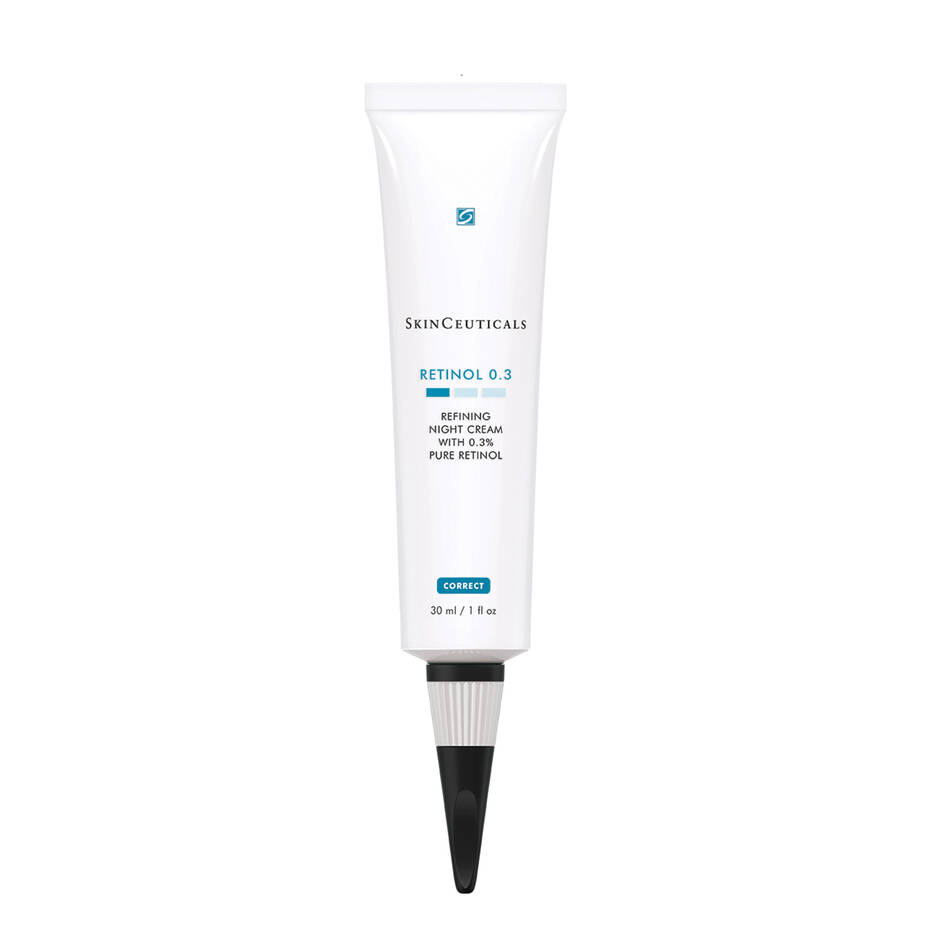
If you are picking a traditional retinol serum (not retinaldehyde) and want clinical-grade formulation, this is my top recommendation. SkinCeuticals Retinol 0.3 has been around for decades and is one of the most studied OTC retinols on the market. It uses 0.3% pure retinol in a stable, encapsulated delivery system that releases the active over time.
The line graduates from 0.3 to 0.5 to 1.0, so you have a clear step-up path just like Medik8. Most beginners do well starting at 0.3 two nights per week, building to nightly over three months. Recommended for patients with normal-to-resilient skin who want a classic retinol experience.
07 / Best Luxury Splurge
Sunday Riley A+ High-Dose Retinoid Serum

If you have graduated past the very-beginner stage and want a luxury retinol serum, Sunday Riley A+ is my top splurge. The 6.5% figure is a blend of multiple retinoid forms at different concentrations, so you get a mix of fast-acting and slow-release retinoid activity. Bolstered with hyaluronic acid, blue tansy, and jojoba oil for cushioning.
This is not where I would start on day one, but it is a great next step after 6 to 12 months on a lower-concentration retinal or retinol serum. Especially good for mature skin that needs a stronger boost.
Retinol Serum vs Retinol Cream: Which Should You Pick?
This is the question I hear most in clinic. Here is the honest answer.
Choose a retinol serum if: you already have a moisturizer you love, you prefer lightweight textures, you want the flexibility to layer other products, or your skin is normal to combination.
Choose a retinol cream if: you have dry skin, you are new to skincare and want fewer products, you find serums feel too active on your skin, or you prefer a simpler routine. Cream bases buffer irritation more than serums, which makes them slightly more forgiving for beginners.
Neither is objectively better. Both formats work if the concentration is right for your skin. If you are torn, the CeraVe Skin Renewing Retinol Serum (which is technically a cream-serum hybrid) or Medik8 Crystal Retinal (which is a balm-serum hybrid) both split the difference.
Best Retinol Serum by Skin Concern
Different skin types benefit from different retinol serum picks. Here is the shortcut.
For beginner sensitive skin: Avene RetrinAL 0.05 Serum. The gentlest of the retinaldehyde options with soothing thermal water.
For acne-prone skin: Naturium Retinaldehyde Serum 0.05% or The Ordinary Retinal 0.2%. Both are lightweight, non-comedogenic, and pair well with acne treatments.
For mature skin ready for stronger retinoid: SkinCeuticals Retinol 0.3 or Sunday Riley A+ High-Dose Retinoid.
For dry skin that needs barrier support: CeraVe Skin Renewing Retinol Serum. The ceramides are genuinely useful.
For someone who wants a clear graduation path: Medik8 Crystal Retinal. Start at 3, move to 6, then 10.
For pregnancy or breastfeeding: None of these. Retinoids are contraindicated in pregnancy. Consider bakuchiol serums, peptides, or vitamin C as safer alternatives.
How to Use a Retinol Serum: Step by Step
The Beginner Protocol
- Cleanse gently. Non-foaming, fragrance-free cleanser is ideal.
- Wait 5 to 10 minutes for skin to be completely dry. Damp skin increases retinol penetration and irritation.
- Apply a pea-sized amount of retinol serum to the entire face, avoiding the immediate eye area and corners of the mouth.
- Wait 5 to 10 minutes for the serum to absorb.
- Follow with a fragrance-free, ceramide-rich moisturizer.
- Optional: a thin layer of an emollient or occlusive on dry patches for slugging on retinol nights.
Frequency Ramp-Up
- Weeks 1-2: 2 nights per week
- Weeks 3-4: 3 nights per week if tolerating well
- Weeks 5-8: 4 nights per week
- Weeks 9-12: 5 nights per week or every other night
- Month 3 and beyond: Nightly if your barrier is healthy
If you experience persistent stinging, redness, or peeling that does not resolve within 48 hours, drop back one frequency level for a week before increasing again.
When to Expect Results From a Retinol Serum
Weeks 1 to 4: Mild dryness, flaking, or slight tightness is normal. This is called retinization. You will not see visible "results" yet, and that is fine. The goal is building tolerance.
Weeks 4 to 8: Texture starts to smooth. Pores look slightly smaller. Some patients experience a brief purge of existing congestion. Tone begins to even out subtly.
Months 3 to 6: The real visible changes appear. Fine lines soften, post-inflammatory pigmentation fades, skin looks denser and more luminous, and acne (if relevant) is meaningfully better. This is the payoff window.
Month 6 and beyond: Continued improvement, but the rate of change slows. Maintenance becomes the focus. This is also when many users graduate to a stronger concentration or move to a prescription retinoid.
Retinaldehyde tends to show results 1 to 2 weeks faster than retinol at equivalent concentrations. If you want the fastest OTC results, prioritize retinal serums (Medik8, Naturium, Avene, The Ordinary) over retinol serums.
Common Mistakes With Retinol Serums
- Starting at too high a concentration. Higher percentages do not equal faster results, they just cause irritation. Start at the lowest concentration available.
- Using nightly from day one. This almost guarantees a barrier flare in week 3. Start twice weekly and ramp slowly.
- Applying to damp skin. Damp skin dramatically increases retinol penetration and irritation. Wait until skin is completely dry, ideally 10 minutes after cleansing.
- Layering with AHAs, BHAs, or vitamin C on the same night. Stacks irritation without additional benefit. Use vitamin C in the morning, acids on retinol-off nights.
- Skipping SPF the next day. Retinol makes you photosensitive. SPF 30 or higher, every single morning, non-negotiable.
What Not to Pair With Your Retinol Serum
Some products should never share a night with your retinol serum.
Prescription tretinoin. If you are on tretinoin, retire your OTC retinol serum. Stacking retinoids just causes irritation.
Benzoyl peroxide. Deactivates retinol and stacks irritation. Use benzoyl peroxide in the morning if you need it.
AHAs and BHAs. Layer these on retinol-off nights. Once a week is fine.
Vitamin C serum. Best used in the morning, not the same night as retinol.
Physical scrubs. Retinol already accelerates cell turnover. Scrubs on top just damage the barrier.
Fragrance-heavy products. Fragrance irritates skin that is already acclimating to a retinoid.
What DOES pair well: niacinamide serums, peptide serums, hyaluronic acid serums, ceramide moisturizers, and bakuchiol (though bakuchiol is redundant with retinol in the same routine).
Frequently Asked Questions
What is the best retinol serum for beginners?
For most beginners, Medik8 Crystal Retinal 3 is the best overall retinol serum because the numbered step-up system removes the guesswork. If you want a drugstore option, Naturium Retinaldehyde Serum 0.05% or The Ordinary Retinal 0.2% Emulsion are both excellent picks. For sensitive skin, Avene RetrinAL 0.05 is my top recommendation.
What percentage of retinol should a beginner serum have?
For a true beginner retinol serum, look for 0.01% to 0.05% retinaldehyde OR 0.025% to 0.1% retinol. Retinaldehyde works faster than retinol at equal concentration, so you can start lower. Start with two to three nights per week and build up as tolerated.
Is a retinol serum or cream better for beginners?
Serums penetrate faster and layer more cleanly under moisturizer, making them a good pick if you already have a moisturizer you love. Creams are more forgiving because the emollient base buffers irritation, which makes them better for very sensitive or dry skin beginners. Both work if the concentration is right for your skin.
How long does it take to see results from a retinol serum?
You may notice subtle texture and tone improvements within 4 to 8 weeks. Significant results, including fine line reduction and pigmentation improvement, typically appear at 3 to 6 months of consistent use. Retinaldehyde tends to show results faster than retinol.
Can I use a retinol serum every night?
Not in the beginning. Start with 2 to 3 nights per week for the first month, then gradually increase frequency as your skin tolerates it. Most beginners can move to nightly use after 8 to 12 weeks if their barrier stays healthy.
Should I use a retinol serum with tretinoin?
No. Do not layer retinol serum on top of prescription tretinoin. Stacking retinoids causes irritation without additional benefit. If you have graduated to tretinoin, retire your retinol serum and use a plain moisturizer instead. See my best moisturizers with tretinoin guide.
Is retinol serum safe during pregnancy?
No. All forms of retinol, retinaldehyde, retinyl esters, and prescription retinoids should be avoided during pregnancy and breastfeeding. Safer alternatives include bakuchiol serums, peptide serums, and vitamin C.
Can I use a retinol serum with vitamin C or acids?
Yes, but at separate times. Vitamin C is best used in the morning while retinol serum is used at night. AHAs and BHAs should not be layered with retinol on the same night, especially as a beginner. Niacinamide and peptide serums pair well with retinol.
What order should I apply a retinol serum in my routine?
Apply retinol serum to completely dry skin after cleansing, before your moisturizer. Wait 5 to 10 minutes after cleansing to make sure skin is bone dry. Follow with a plain ceramide-rich moisturizer to buffer irritation.
What is the difference between retinol and retinaldehyde in serums?
Retinaldehyde is one conversion step closer to retinoic acid than retinol, which means it works faster (some studies suggest up to 11 times faster). Retinol requires two conversion steps to become active. Both are gentler than prescription tretinoin. Retinaldehyde serums like Medik8 Crystal Retinal and Naturium Retinaldehyde are increasingly what I recommend to beginners.
The Bottom Line
The best retinol serum for beginners is the one you will actually use consistently. Pick a low concentration, start with two to three nights per week, and stick with it for at least twelve weeks before judging results.
My top three across budgets: Medik8 Crystal Retinal 3 for the step-up system, Naturium Retinaldehyde 0.05% for the best drugstore option, and Avene RetrinAL 0.05 for sensitive skin. Use SPF daily and be patient.
You Might Also Like
More on the retinol journey
Best Retinol for Beginners (2026)
The broader retinol guide covering creams, oils, and other formats beyond just serums. My complete pillar post.
Read More → TretinoinBest Moisturizers to Use With Tretinoin
When you graduate from retinol to prescription tretinoin, these are the moisturizers I recommend to pair with it.
Read More → Mature SkinBest Drugstore Moisturizers for Mature Skin
Anti-aging picks under $35. Perfect companion for the retinol serum you just picked.
Read More → TretinoinBest Moisturizer for Tretinoin Peeling
If your retinol serum starts making you peel, this rescue playbook works for retinol peeling too.
Read More →This post contains affiliate links, which means I may earn a small commission if you purchase through them at no additional cost to you. I only recommend products I have personally used or recommend in clinic. This article is for educational purposes only and does not constitute personal medical advice; please consult your own dermatologist for individualized care.
Hello, World!